
Scottish Clans in New England
Whether you carry a clan name, had a Scottish grandparent, or have walked past the clan tents at a Highland Games and wondered where you fit in, start here. Find your Scottish clan, connect with a clan society near you, and help keep clan heritage alive across Massachusetts, Maine, New Hampshire, Vermont, Rhode Island and Connecticut.
Weaving Our Tartan
A free guide for preserving and advancing Scottish clan heritage in New England.
Get the free guideYour path into Scottish clan life
Four guides from Larry Bethune, Editor-in-Chief of Scots in New England, take you from first curiosity about your Scottish ancestry to leading a clan community of your own. Read them in order or start wherever you are.
-
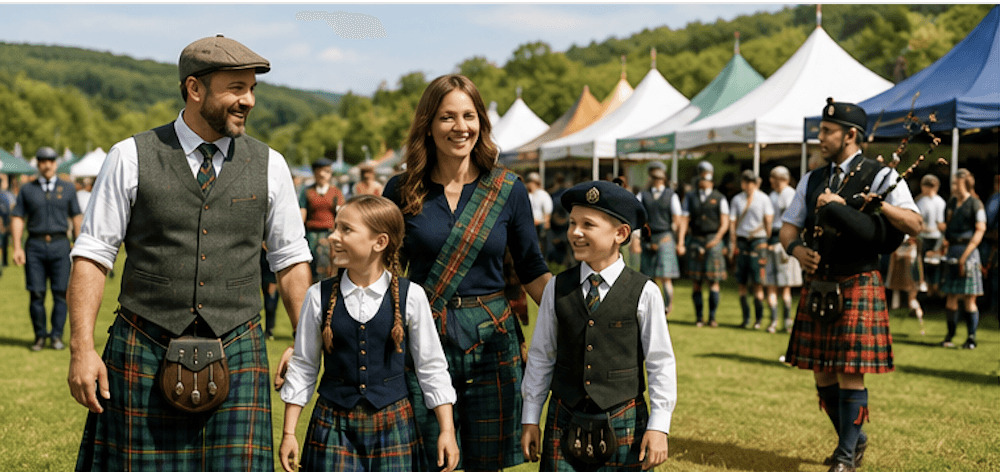 Step 1
Why Join a Scottish Clan?
What modern clan associations actually do, why they suit families and young adults, and why you don’t need a kilt, a pedigree or a complete family tree to take part.
-
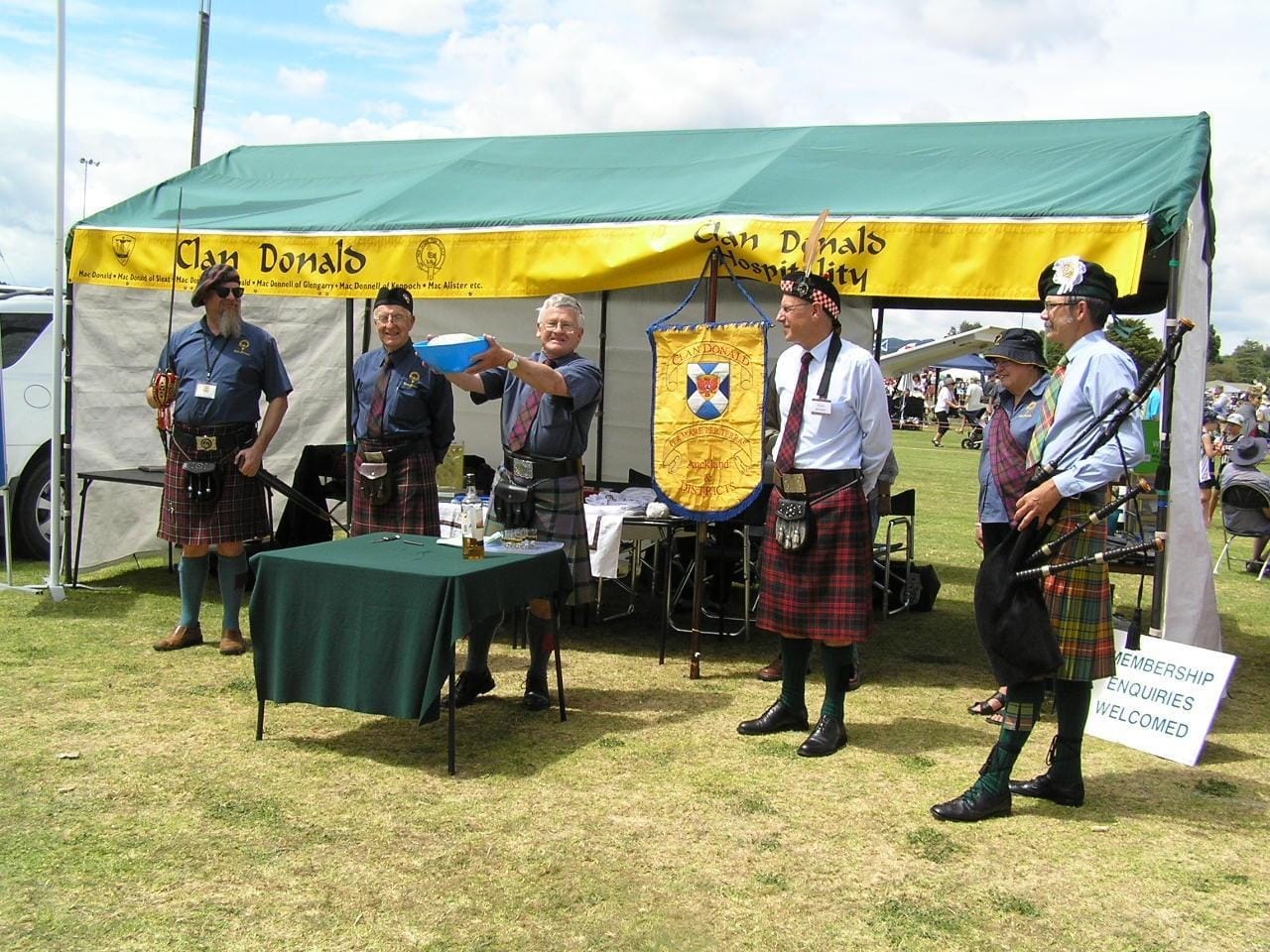 Step 2
Find Your Scottish Clan
A New Englander’s guide to clans, septs, tartans and Scottish genealogy. Trace your family back to Scotland, check surname connections with reliable sources, and use DNA as evidence rather than an answer.
-
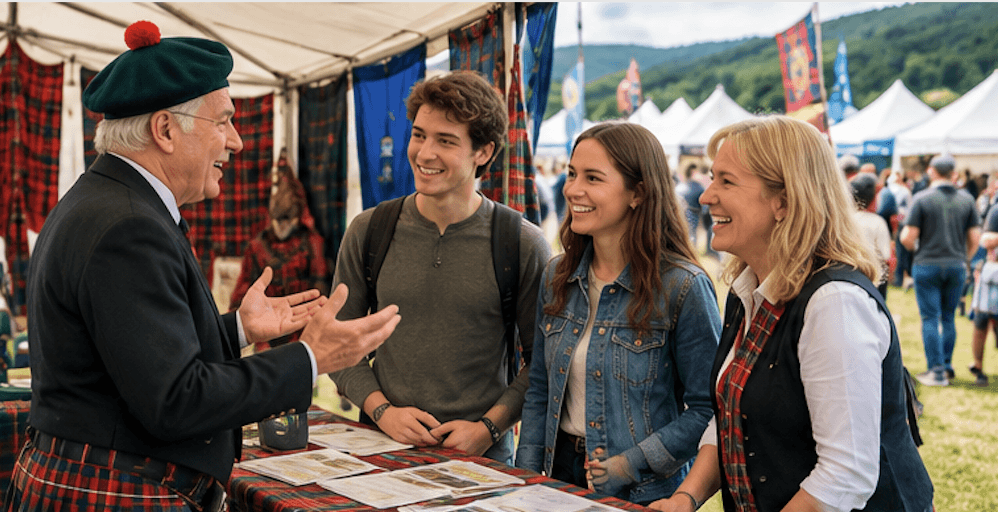 Step 3
Find a Scottish Clan Society in New England
A directory of clan societies with New England or Northeast regions, commissioners and conveners, with links to each society’s official membership information.
-
 Step 4
Starting a Scottish Clan Association in New England
A practical guide to bringing your clan together: finding your first members, holding a founding gathering, running a clan tent at the Highland Games, and planning your first 90 days.
Clan societies active in New England
Many Scottish clan and family societies have New England or Northeast regions, with commissioners and conveners who host clan tents at Highland Games and welcome new members. Our directory lists contacts and membership links for these clans.
- Clan Buchanan
- Clan Cameron
- Clan Campbell
- Clan Cochrane
- Clan Donald
- Clan Donnachaidh
- Clan Dunbar
- Clan Fraser
- House of Gordon
- Clan Gunn
- Clan Hamilton
- Clan Innes
- Clan MacBean
- Clan MacDougall
- Clan MacIntyre
- Clan MacKinnon
- Clan MacLachlan
- Clan MacLaren
- Clan Maclean
- Clan MacLellan
- Clan MacLeod
- Clan Macpherson
- Clan Ross
- Clan Scott
- Clan Sinclair
- Clan Sutherland
Don’t see your clan? It may still be active here. Clan representation changes as new commissioners volunteer, so visit the Clan Village at a New England Highland Games and ask at the tents. If you represent a Scottish clan in New England, email editor@scotsnewengland.org to be added or to correct a listing.
Common questions about Scottish clans
What is a Scottish clan?
A Scottish clan was a community of families connected by kinship, territory, allegiance and protection, usually associated with a chief. The Gaelic word clann means children or descendants, but not everyone in a clan descended from one common ancestor. Today, clan societies and associations bring together people who share an interest in a clan’s history and heritage.
Do I have to prove I’m related to join a clan society?
Usually not. Each clan society sets its own membership rules. Many welcome people who carry the clan name or an associated surname, descendants through any family line, spouses, and people with a genuine interest in the clan. If you’re unsure, contact the society or ask at its clan tent.
What is a sept, and is my surname one?
A sept is a family or surname associated with a larger clan. There is no single official list of septs; recognition is a matter for each clan chief. Treat online sept lists as a clue, then confirm with the clan’s own society and your family’s genealogy.
How do I find my clan tartan?
First confirm your clan or family connection, then search the Scottish Register of Tartans, maintained by National Records of Scotland, and ask the clan society which tartans it recognizes. Many clans have several tartans, including hunting and dress versions, and there are district tartans too. Our guide to Scottish tartans explains more.
Can a DNA test tell me my clan?
Not on its own. Clan identity developed through kinship, geography and allegiance as well as descent. DNA is most useful alongside documentary research, for example to identify genetic cousins or test a theory about one family line.
Where can I meet Scottish clans in New England?
Visit the Clan Village at a New England Highland Games or Scottish festival, such as the Maine Highland Games or the New Hampshire Highland Games & Festival. Clan representatives there can help with surnames, septs, tartans and membership. You can also contact the societies in our New England clan society directory.
How do I start a clan association in New England?
First check whether your clan already has a national or international society, since it may be easier to form a New England chapter or branch. Then find five to ten interested people, hold an informal founding gathering, and plan one activity together, such as a clan tent at a Highland Games. Our guide to starting a clan association covers each step.
Weaving Our Tartan
A Guide for Preserving and Advancing Scottish Clan Heritage in New England
A free guide from Scots in New England for clan members, commissioners, conveners and anyone working to keep Scottish clan heritage active in the region.
Enter your email to download your copy.
Support Scots in New England
Scots in New England is an independent, nonpartisan nonprofit. Our clan guides, the New England clan society directory and our genealogy resources are free to read, and donations help us keep them researched and up to date.
Scots in New England (SINE) Inc. has tax-exempt status under Internal Revenue Code section 501(c)(3). Your donation is tax deductible as allowed by law.
Represent a clan society or Scottish organization in New England? Send news, additions or corrections to editor@scotsnewengland.org.